

This article is a review of the study:
Zakharov, A., & Chapkovski, P. (2025). The effect of war on redistribution preferences. Journal of Public Economics, 241, 105284. https://doi.org/10.1016/j.jpubeco.2024.105284.
Research by A. Zakharov and F. Chapkovski provides an answer to an important question: does war change public redistribution preferences. An analysis of responses from Russian citizens shows that among supporters of the war, a “rally-around-the-flag” effect emerges, increasing people’s willingness to approve of an active role of the government in redistributing income.
The study is based on an online survey of 3,920 Russian respondents conducted on the Toloka platform. The research was carried out in two stages.
Stage 1.
From December 19 to 20, 2022, researchers collected participants’ socio-demographic characteristics and measured their level of trust in the government as well as their prosocial preferences (individual’s inclination toward altruism, cooperation, and helping others).
Stage 2.
From December 23 to 30, 2022, the main experimental stage took place. Participants were randomly divided into three groups that were asked the same questions, but in a different order.
The key idea of this stage was to use priming – reminding respondents about the war by changing the order of questions before measuring the main outcomes. The logic is straightforward: if you first make a person think about military action, it may influence their subsequent responses.
In the Baseline group, questions about prosocial preferences, trust in the government, and redistribution were asked first. Only at the end did they answer questions about the war. Preference for redistribution refers to citizens’ demand for active government involvement in redistributing income and resources in favor of vulnerable groups.
In the War group, participants answered questions about their level of approval and support for military action at the very beginning of the second stage, followed by assessments of prosociality, trust, and redistribution. At the end of the survey, questions about the costs of war were asked.
In the War + cost group, two blocks of questions concerning support for the war and its costs were placed at the very beginning of the second stage.
A diagram of the experimental design is shown in Fig. 1.
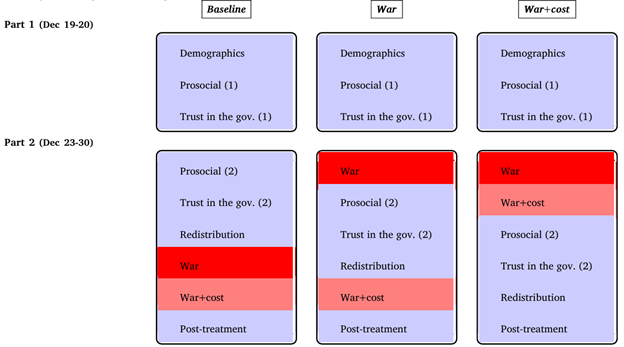
Fig. 1. Design of the experiment by Zakharov and Chapkovski, 2025.
Source: Zakharov and Chapkovski, 2025
The first block of war questions (support for the war) included whether the respondent supports the actions of Russian troops; believes Russia will win; supports the annexation of Ukrainian territories; agrees that the West bears responsibility for the conflict; follows news about the military operation; and when, in their opinion, the war will end.
The second block (costs of the war) included questions about how respondents would react to various potential consequences, such as military conscription, martial law, the use of nuclear weapons, or an economic downturn.
Since participants were randomly assigned to three groups, researchers were able to directly measure the effect of priming.
The results for the entire sample show that the effect of war reminder is statistically insignificant, which, however, can be explained by the strong polarization of responses between respondents from different camps. When the sample was split into war supporters and war opponents – defined as those with predicted support above and below the median – the findings became much more informative.
Among supporters, reminding them about the war led to a statistically significant increase in demand for redistribution: the redistribution preference index rose by 0.105 standard deviations. At the same time, for opponents of the war, the effect is the opposite – the redistribution preference index decreases by 0.123 standard deviations.
To understand the mechanism behind this shift, the authors conducted a mediation analysis, examining whether the change in redistribution preferences was driven by trust in government or by prosocial preferences. This analysis focused on respondents whose level of war support was above the median.
The results showed that increased trust in the government was the key mechanism. War triggered a rally-around-the-flag effect, which raised trust in government. As trust increased, people became more willing to support an expanded role for the government’s social functions and redistribution.
For supporters of the war, awareness of its costs does not significantly change their demands on the state, while for opponents, mention of the costs leads to a decline in support for redistribution. Coupled with growing public trust in the government, the findings of this article provide a better understanding of why it became possible to implement a series of budget reforms aimed at increasing the tax burden in Russia.
It is important to note that the experiment was conducted in the first year of the war, and by the end of the fourth year, public preferences and their drivers may have undergone significant changes. It cannot be ruled out that the prolonged nature of the war and the growing number of victims may lead to its consequences being felt by an increasing proportion of the population, which, in turn, may weaken the findings identified in the article – in particular, reducing the level of trust in the government. The authors themselves acknowledge the uncertainty surrounding the long-term implications of the effects identified in this work and the potential variability of these effects based on the duration of the war.
* AI tool was used to create the image: ChatGPT (OpenAI Image Generation)


